Seomjingang Train Village
Overview
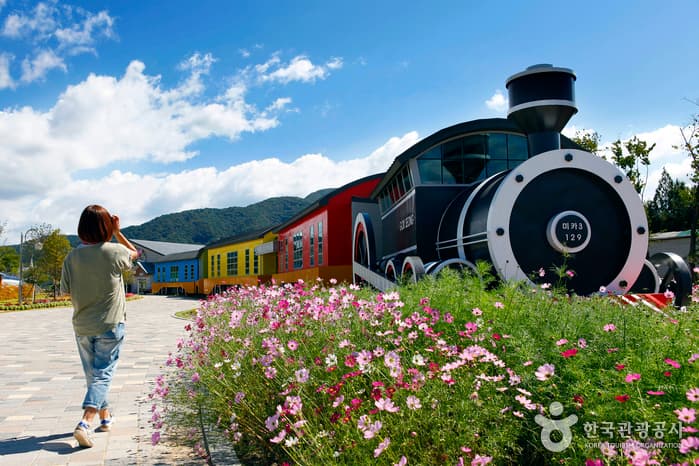
Since its development in April 1999 as a part of government efforts to boost regional tourism, Seomjingang Train Village has established itself as a popular attraction in Gokseong. A replica of the region's old steam engine train runs 10 kilometers between the old Gokseong Station in Seomjingang Train Village and Gajeong Station. The train runs along the old tracks at a moderate speed, allowing passengers to enjoy the scenic view along the tracks.
Nearby Places
Dorisan Observatory
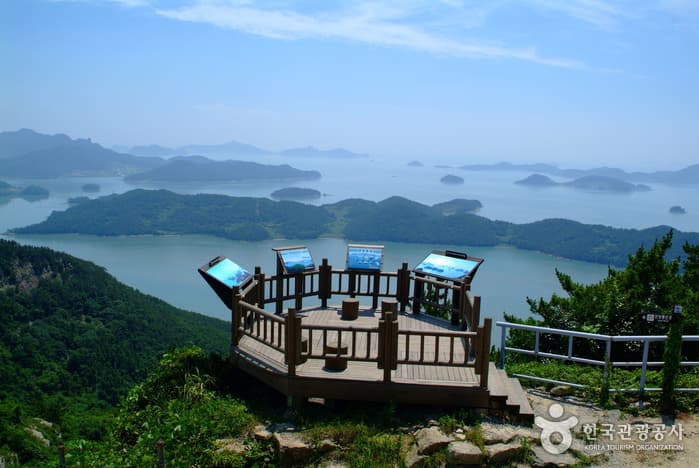
Located at the top of Mt. Dorisan in Yeomi-ri of Sangjodo Island, Dorisan Observatory is the highlight of the area, and offers panoramic views of Dadohae and its many islands including Gwanmae, Byeongpung, Nabae, Daema and Soma Islands. The eco-friendly structure provides panoramic views of nearby islands that locals like to say, “appear scattered over the sea like a flock of birds over water.” Visitors can enjoy majestic sunrise and sunset views, and on days with clear visibility, can see Bogildo Island in Haenam and even as far as Hallasan Mountain and Chujado Island in Jeju. Another of Jodo’s attractions is the nature lover spots on Hajodo Island. Jodo is comprised of the Sangjodo and Hajodo Islands connected by a bridge. The entire area is filled with pine trees and has plenty of beach access. The nearby Dondaebong Peak (230m) and the Hajodo Lighthouse offer comparable views and scenic landscapes for visitors in the area to enjoy.
Hwawon Oceano Tourism Complex
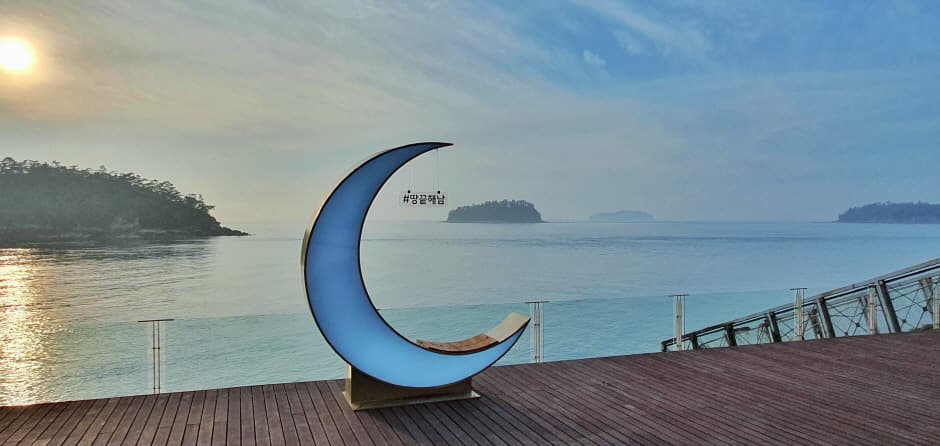
Set before the beautiful Korean archipelago, Hwawon Oceano Tourism Complex offers visitors a romantic beachside camping experience with a large campground and convenience amenities such as shower stalls. The campsite is particularly beautiful at sunset and night when stars fill the sky. Currently, the complex offers a golf course in addition to the campground, with plans to add a culture & arts center and marine world zone. Particularly, Pine Beach Golf Course located inside the tourism complex is surrounded by the ocean on three sides, and is perfect for playing a round of golf toward the endless ocean. The course is regarded as Asia’s Pebble Beach, a small coastal resort destination and home to famous golf courses in California.
Comments 0
NewestBe the first to comment on this Guides.